


Droplet separation
How does droplet size affect choice of droplet separator?
A process gas contains a wide range of droplet sizes distributed in line with a normal (Gaussian) distribution graf. Different types of droplet separators capture and remove different droplet-size ranges.

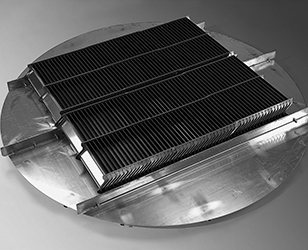
Profiles
Profiles, also known as lamellas, are used in processes with large gas flows and where you want to minimise pressure drop. Profiles remove droplets >15 µm under normal operating conditions.
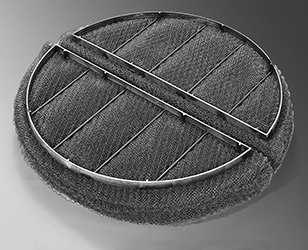
Demisters
A demister consists of multiple layers of mesh fabric knitted from metal or plastic monofilaments, crimped and then assembled so that the crimps cross in successive layers forming a pad. A wire demister removes droplets larger than 5 µm.
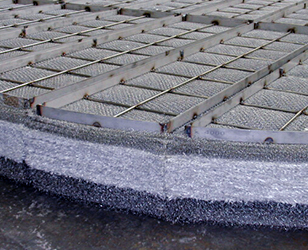
Coalescers
A coalescer is a pad fabricated from a co-knitted composite fabric consisting partly of monofilaments, and partly of a staple fibre yarn. It is the smaller fibres that allow droplets in the size range of 2-5 µm to be captured in the gas stream.
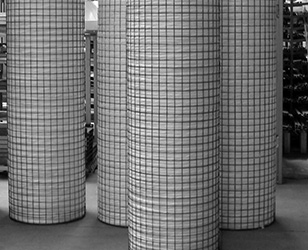
Candle filters
Candle filters are made up of millions of composite fibres and are mainly used in processes where droplets <2 µm need to be separated from a gas stream.